Wednesday, September 25, 2013

What I'm Drinking: Brown County Winery Vista Red

Hidden away in the forest of Brown County lies Brown County Winery. Their most popular Red wine is the Vista Red.


In the spectrum of Semi-Sweet Red wines, this one is a little more complex than Oliver Wineries Red, yet a little more simple than French Lick's Table Red. Its a balanced wine with the tones of acid, alcohol, sweetness, and tannins all at about the same level. As with most other Red Table wines from the Midwest, this is made with Concord grapes and has the distinct grape jam aroma to it.

This bottle was a delight to drink. As a sub $10 bottle, it's a nice every day bottle of wine. I'd rate it as similar Semi-sweet Reds I've tasted at 75/100.

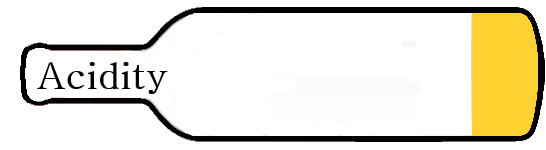
Acid: 2/5
Alcohol: 3/5
Sweet: 3/5
Tannins: 2/5

Wednesday, September 18, 2013

What I'm Drinking: St. James Winery - Velvet Red

On a cool, summer afternoon, with scattered showers in the area, I picked up a bottle of Velvet Red from St. James Winery to enjoy at a picnic at Symphony on the Prairie. In the same vein as other Midwest wineries, this House wine is a semi-sweet. While not as sweet as Oliver Wineries offering, this wine is more complex and fragrant. 

The aroma is fruity, with a slight earthy quality to it. 

The wine itself is sweet, but not overly so like other wines. The Acids and Tannins in the wine play a nice 1, 2 to the sweetness. The alcohol level is low (at 10%), leaving a fairly clean after taste with little bite.

The wine has a light-body with a deep violet hue.


Perhaps it was the setting when I first opened this bottle, but the wine has this bright, summer like air to it. For a sub $10 bottle of wine, I'd rate the bottle 80 out of 100.

Acid: 3/5
Alcohol: 2/5
Sweet: 3/5
Tannins: 3/5

Friday, September 13, 2013

Symphony on the Prairie

Each Summer, the Indianapolis Symphony Orchestra puts on a number of shows at an outdoor museum called Conner Prairie. The Museum itself is quite amazing, featuring outdoor areas with employees in period costume from the early Pioneer days to the Civil War. But the symphonies are what I really enjoy. About half of the concerts are performed by the Indianapolis Symphony Orchestra while the other half are performed by other groups, such as the River City Brass Band.
This year, I was fortunate enough to attend 3 concerts. At these concerts, outside food and drinks are permitted, including alcohol. At each of the three concerts, I've tried a different wine. First was St. James Velvet Red. Second was Forbidden Fruit - Moscato from St. Julian wineries. The final wine was Raggae Red from Easley Winery.

The stores at Conner Prairie sell a number of picnic and wine accessories in case while there's a beer and wine tent at the symphony itself for those who forget the wine (or run out).

In the Midwest, 2013 was a mild summer with only a few days above 90 this year. The evenings on the lawn were cool and the bugs were surprisingly inactive. But why is it that a glass of wine in my house can be out for 5 minutes and attract a bug, yet I can drink 2 full glasses of wine before a bug finds my drink?

Wednesday, September 11, 2013

What I'm Drinking: French Lick Red Table Wine

One of a number of wines I received for Christmas was French Lick Red Table Wine. As a table wine, its jammy flavor works well with some of the simple dishes I make during the week after work.


This wine is clear, un-aged, and has a light purple hue. It has a strong aroma of grape jam, so I was unsurprised to find on the back label that the wine is made from Concord grapes. It has a low acidity and a medium-low alcohol content from what I can taste. The wines body is dominated by its sweetness, which is semi-sweet, and the tannins, which are present, yet far from overwhelming.

The wine is made at the French Lick Winery in French Lick, Indiana. Despite the odd name, French Lick and its sister town, West Baden, have a rich history. Its heyday was in the late 1800s and early 1900s, when it was known for its mineral waters and catered to the well-to-do with spas and other amenities, including a casino. Today, French Lick and West Baden are still a destination, but of a different sort with Train Rides, bowling, horseback riding, go karts, hiking, an indoor water park, and of course, a casino. My wife and I have made a few trips to French Lick and while it might not have the glitz of Las Vegas, it also doesn't come with the big price tag.

I've found the 'French Lick Red Table Wine' a refreshing wine. And at the sub $10 price range, this wine offers simple yet pleasant tastes. Overall, given the price range, I'd rate this wine a 70 out of 100.
 
Sweet: 4/5

Alcohol: 2/5
Tannins: 2/5
Acidity: 1/5


Wednesday, March 13, 2013

Know Your Grapes: Concord

There's roughly 70 different grapes grown in the Midwest cultivated for wine production. This time we look at a versatile grape, the Concord.

(From arvindgrover via Flickr)


First cultivated in Concord, Massachusetts, today the Concord grape is among the most versatile grapes around. Grape juice, grape jelly and candy can all be made from the Concord grape. Concord grapes are also used as a table grape, meaning they are eaten raw alone or in a fruit salad. Uncommonly, it is used to make wine.

Given that the Concord grape is used to make Grape juice, one might conclude that the wine would have a similar taste. Judging from the taste of Oliver Wineries Sweet Red, which is made from the grape, you would be correct. This particular wine has a simple taste that is on the sweet side and the taste is reminiscent of grape juice.

The Concord grape is a member of the Vitis Labrusca species, one of a number of grape varieties native to North America. V. labrusca is commonly referred to as a Fox grape A fox grape does not refer to the animal of the same name, but instead is a reference to the aroma and taste of these grapes, which have a muskiness. According to a few resources online, the first reference to 'Fox Grapes' comes from 1622 in a letter written by John Bonceil titled 'His Majesties Gracious Letter to the Earle of South-Hampton'. John was living in Virginia at the time and writing about a number of different topics. In this letter, he describes the grape has been used to make a very sweet red wine. Despite the early reference, the ultimate source of the term is unknown and a number of theories abound. Regardless, Fox Grapes are a staple of Midwestern grapes as they are uniquely suited to grow here with our hot summers and cold winters.

All said, the Concord is a good grape for juice, jelly, and sweets, but can be disappointing in a wine to wine experts. As someone who started drinking wine with a bottle of Soft Red, I can attest that it creates 'gateway' bottles for novice or amateur wine drinkers to taste and later attempt more serious wines.

Friday, March 8, 2013

Know your Wine Terminology: Table Wine

Many wines have special uses. Sparkling and Champagne wines are often used for celebrations. Gluhwein is a type of mulled wine suitable for cold winter days. Icewine and dessert wines are best paired with sweet dessert dishes. In the United States, when we speak of Table Wine (http://en.wikipedia.org/wiki/Table_wine), we speak of a wine which is not sparkling and which is not fortified. Table wine, such as 'French Lick Red Table Wine' is often labelled without indication of the varietal. A table wine might be a wineries special blend of wine from a variety of grapes.

In Europe, Table Wine is the lower of two official categories of wine. The higher category is 'Quality Wines Produced in Specified Regions' (http://en.wikipedia.org/wiki/Quality_Wines_Produced_in_Specified_Regions) and must follow a large number of regulations to labelled as such. In Europe, the Table Wine designation is easier to come by. This sense of lower quality is also inferred when used in the United States as well, along with the un-sparkling and un-fortified status.

Table Wine should not be confused with Table Grapes (http://midwestwinegeek.blogspot.com/2012/12/know-your-grapes-table-vs-wine-grapes.html) which refers to grapes destined for direct consumption (as opposed to wine grapes, which are intended to be made into wine).

Wednesday, March 6, 2013

What I'm Drinking: Easley's Warm Mulled Wine

While the vast majority of wines should never be heated or served above room temperature, there's a small class of wines that thrive being warmed. In October I had a bottle known as Witches Brew which went wonderful on a cold fall day with its mulling spices. Today, I'm drinking a similar wine from Easley Winery, their 'Warm Mulled Wine'.


From the label, it is a mixture of a Red table wine, mulling spices, honey, apple cider, and lemon juice. Together, this makes for a wine with a medium level of tanins, low level of alcohol, a medium level of acids, and a fairly sweet wine. Its a balance that truly tastes better warmed up on the stove or in the microwave than at room temperature or served cold.

The wine itself is a dark reddish-purple hue and is well mixed. From the appearance, I would not guess that spices and other things were mixed in with the wine.

Overall, I'd rate this wine a 65 out of 100. It contains some complex tastes, but these come from the spices, honey, cider, and lemon juice and not from the wine itself. But the wine itself runs less than $10 and for the price, is a great warmed wine for a winter night.